Short answer: Water stains, missing shingles and a sagging roof line need attention right away. Damaged flashing, curling shingles, granule loss and attic moisture mean you should schedule an inspection soon.
Most roof problems start small: one lifted shingle, a cracked vent boot, a gap in the flashing. The trouble is that the first sign you notice is often inside the house, after water has already traveled through the roof. This guide lists the nine most common signs your roof needs repair and, just as important, which ones need attention right away.
The 9 signs
1. Water stains on ceilings or walls
Yellow or brown stains that grow after rain or snowmelt are the clearest sign water is getting past the roof. Keep in mind the stain is often not directly under the leak – water can run along the decking or a rafter before it drips. Roof leak repair starts with finding the real entry point.
2. Missing, torn or lifted shingles
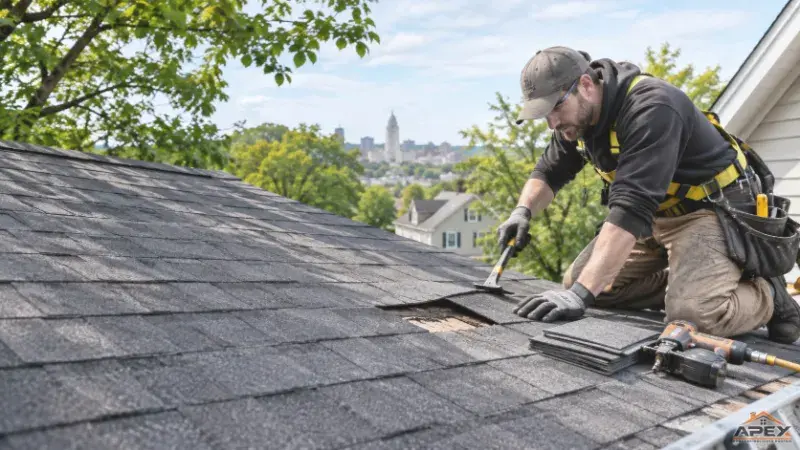
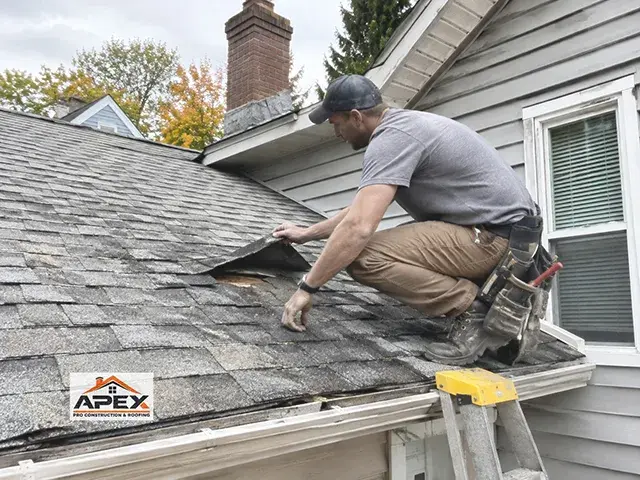
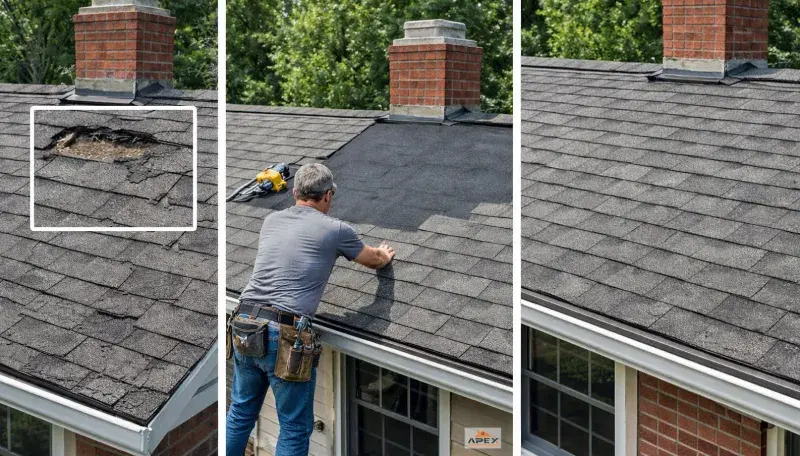
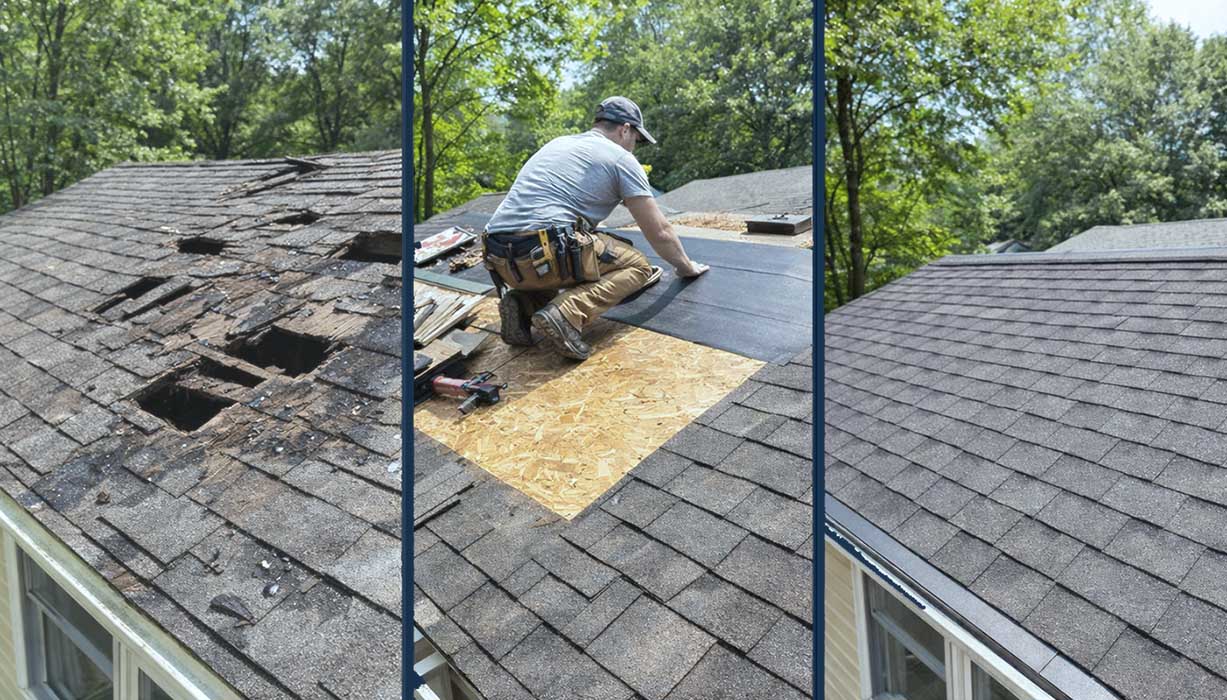
Strong wind can break the seal on asphalt shingles, lift them or tear them off. Look for gaps in the pattern, shingles lying in the yard and exposed black underlayment. One missing shingle leaves the roof deck open to the next rain.
3. Damaged flashing
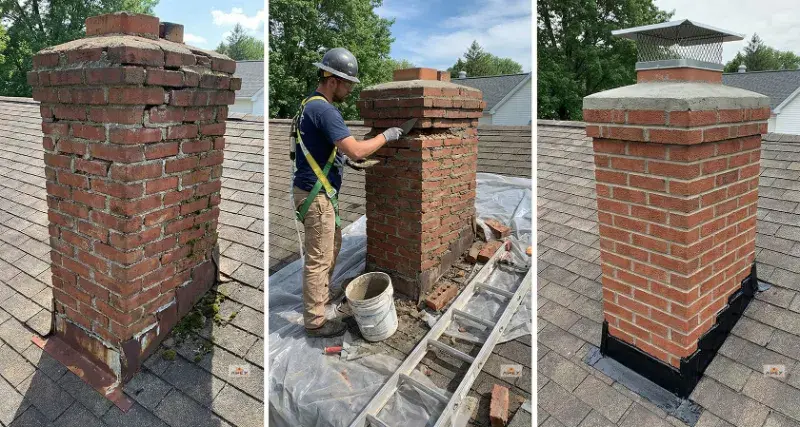
Flashing is the metal that seals the joints around chimneys, walls, skylights and vents. Rusted, bent or lifted flashing, or flashing held on mostly by caulk, is one of the most common leak sources. If the problem is around the chimney, see chimney repair.
4. Curling, cupping or cracked shingles
Shingles that curl at the edges or crack across the surface are aging. On one slope, a repair may be enough. Across the whole roof, it usually means the roof is near the end of its life.
5. Granules in the gutters
The granules on asphalt shingles protect them from the sun. Some loss is normal on a new roof, but heavy piles in the gutters or bald patches on the shingles show the roof is wearing out.
6. Moisture or light in the attic
From the attic, look for dark spots on the decking, damp insulation, rusty nail tips or daylight showing through. Moisture can also come from poor ventilation, so roof and attic conditions should be checked together.
7. Ice dams along the eaves
Ice dams form when heat from the house melts snow on the upper roof and the water refreezes at the colder edge. Water backs up behind the ice and can get under the shingles. Ice dams that form every winter usually point to insulation or ventilation problems.
8. A sagging roof line
A dip in the ridge or a slope that looks wavy can mean long-term moisture damage to the decking or framing. This is not a do-it-yourself check: call a roofer and keep people out of rooms where the ceiling is bulging.
9. Damage after a storm
After high wind, hail or a fallen branch, check the roof from the ground even if nothing is leaking yet. Storm damage often shows up as a leak weeks later.
Seeing one of these signs? We inspect the roof and explain the repair and the cost before any work starts.
Get My Free EstimateWhich signs can’t wait
Some signs mean water is already getting in. Others are a reason to schedule an inspection soon. Use this table to decide.
| Sign | How urgent | What to do |
|---|---|---|
| Active leak or dripping water | Right away | Catch the water, stay away from wiring, call a roofer. |
| Bulging ceiling or sagging roof line | Right away | Keep people out of the room and call a roofer. |
| Missing shingles after a storm | Within days | Schedule a repair before the next rain. |
| Spreading water stains | Within days | Mark the edge and photograph it after each rain. |
| Damaged or rusted flashing | Soon | Schedule an inspection. |
| Curling shingles or granule loss | Plan ahead | Get an inspection and ask about repair vs. replacement. |
What you can check safely from the ground
- Walk around the house and look at each slope with binoculars.
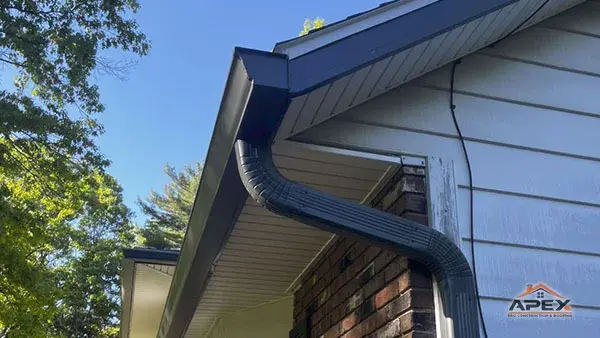
- Check the gutters and downspout outlets for granules and shingle pieces.
- Look at the flashing around the chimney and vents for gaps or rust.
- Go into the attic with a flashlight after a rain and look for damp spots.
- Take photos and note when a leak appears (heavy rain, wind, snowmelt).
Never climb onto a wet, icy or steep roof. The information above is enough for a roofer to know where to start.
Repair or replace?
A repair usually makes sense when the damage is limited and the rest of the roof is in good condition. When leaks keep returning in different places, shingles are worn across the roof or the decking is soft, roof replacement is often the better long-term choice. A good contractor explains both options and lets you decide.