Short answer: Most chimney leaks come from failed flashing, a cracked crown, a missing cap, worn mortar joints, porous brick or a missing cricket behind a wide chimney.
A leak next to the chimney is one of the most common calls we get. The good news is that chimney leaks almost always come from one of a handful of places, and most of them can be repaired without rebuilding the chimney. Here are the six causes we see most often and how each one is fixed.
6 common causes
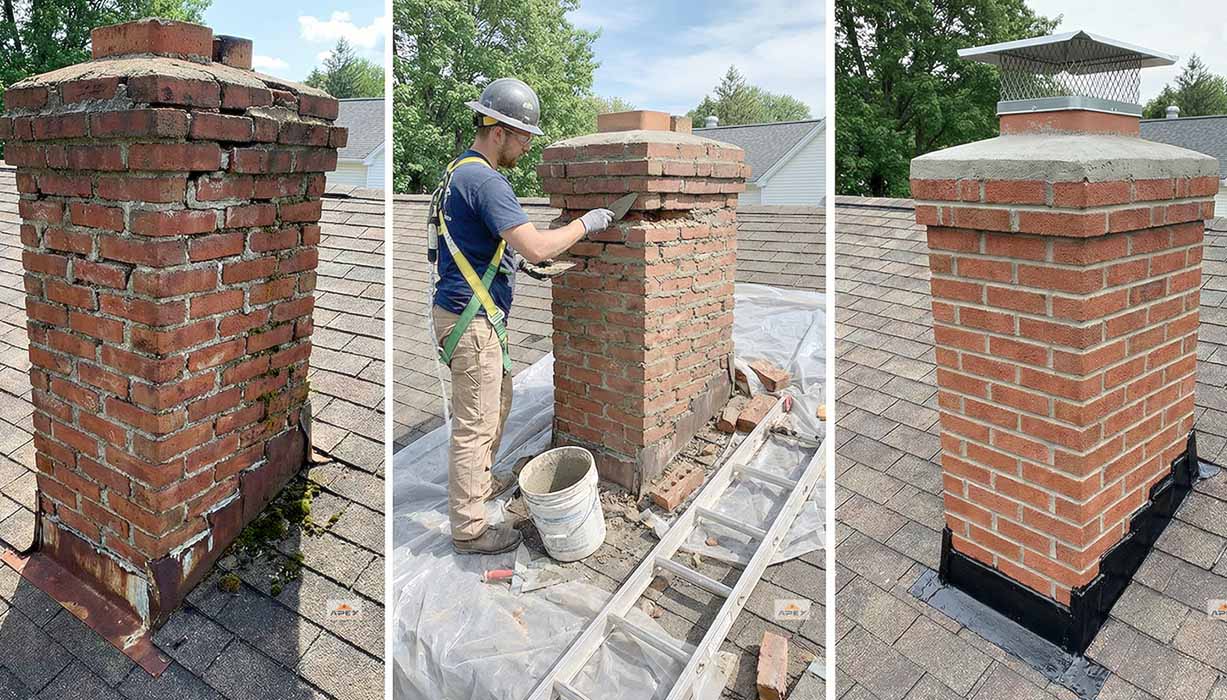
1. Failed chimney flashing
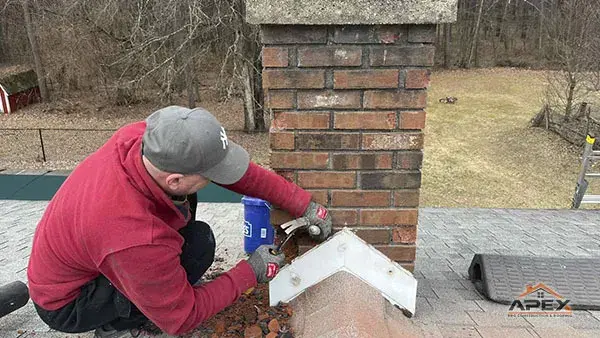
Flashing seals the joint between the chimney and the roof. It’s made of step flashing woven into the shingles and counterflashing set into the mortar above it. When the metal rusts, the counterflashing pulls out of the mortar joint or the whole thing was installed with caulk instead of proper overlaps, water runs straight into the attic. This is the number one cause. More in what chimney flashing is and why it fails.
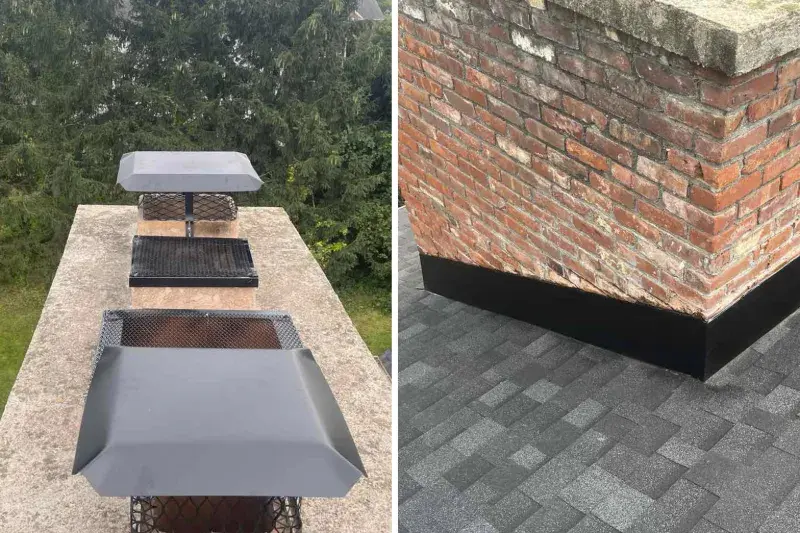
2. A cracked chimney crown
The crown is the concrete or mortar slab on top of the chimney. It’s meant to shed water away from the brick. Over time it cracks from freeze-thaw cycles, and water runs into the masonry from the top.
3. A missing or damaged cap
Without a cap, rain falls directly into the flue. A metal cap with a screen also keeps out debris and animals. A cap is one of the simplest and least expensive chimney repairs.
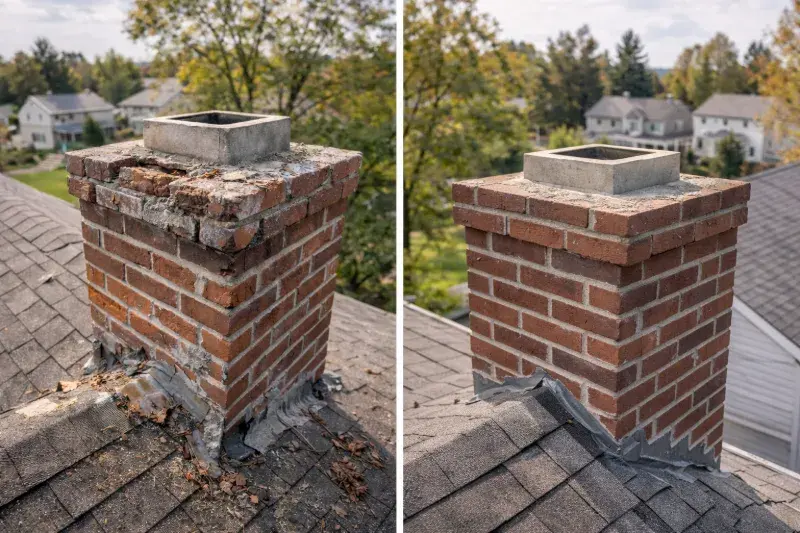
4. Worn mortar joints
Mortar wears out faster than brick. Sandy, cracked or recessed joints let water soak into the chimney, where it freezes, expands and does more damage each winter. The fix is repointing.
5. Porous or spalling brick
Brick absorbs water. When the faces start flaking or popping off (spalling), the brick takes on even more water. Damaged bricks are replaced, and the cause – usually a crown, cap or drainage problem – is corrected.
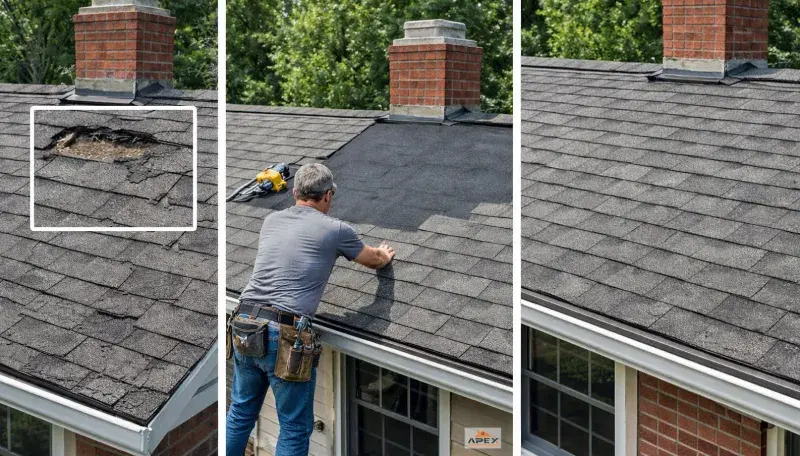
6. No cricket behind a wide chimney
Water and snow pile up behind a chimney on the uphill side. Wide chimneys (more than 30 inches across, under common building code provisions) need a cricket – a small peaked structure that diverts water around the chimney. Without one, water sits against the flashing and finds a way in.
Leak by the chimney? We inspect the flashing, crown, cap and masonry and repair the part that’s actually failing.
Get My Free EstimateHow to tell where the water is coming from
| What you see | Likely cause |
|---|---|
| Stain on the ceiling next to the chimney | Flashing or a missing cricket |
| Water inside the fireplace or flue | Missing cap or cracked crown |
| Damp or stained brick in the attic | Worn mortar or porous brick |
| White, chalky deposits on the brick (efflorescence) | Water moving through the masonry |
| Leak only in wind-driven rain | Flashing gaps or porous brick on the windward side |
This table is a starting point, not a diagnosis. Several causes often happen together, and condensation inside the flue can also look like a leak.
What to do next
- Note when the leak appears and take photos of the stain.
- Look at the chimney from the ground with binoculars: rust, gaps in flashing, missing cap, cracked crown.
- Don’t try to fix flashing with roofing cement or caulk – it only delays the real repair.
- Call a contractor who repairs both roofing and chimneys, since most leaks happen where the two meet.
We repair chimney flashing, crowns, caps and masonry across the Albany, NY area. See our chimney repair service.