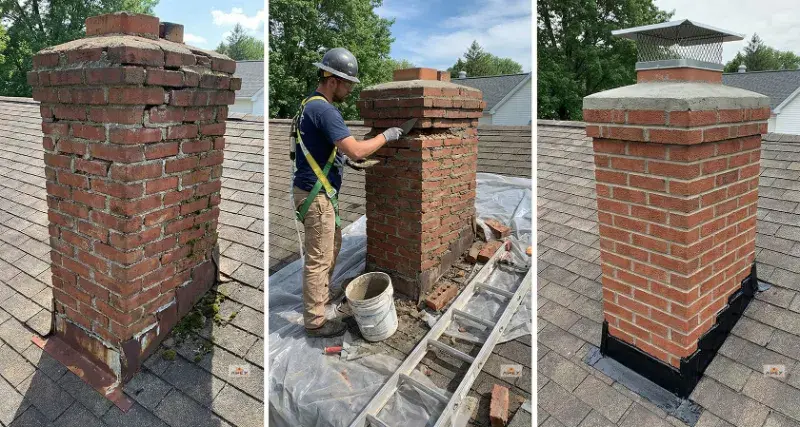
Short answer: Repointing replaces worn mortar between the bricks. Sandy, recessed or cracked joints are the main signs. A typical residential chimney often takes one to two days, in weather above freezing.
Mortar is the weak link of any brick chimney. It’s softer than brick by design, and after years of rain, snow and freeze-thaw cycles it starts to crumble. Repointing replaces that worn mortar before water and ice loosen the bricks. Here’s how to tell if your chimney needs it, what the work involves and how long it takes.
What is chimney repointing?
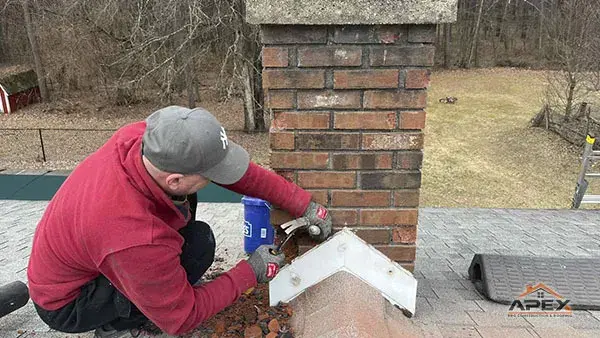
Repointing means cutting out the deteriorated mortar from the joints between bricks and packing new mortar in its place. The bricks stay where they are. Done in time, it stops water from soaking into the chimney and keeps the structure stable for many more years.
Signs your chimney needs repointing
- Sandy or crumbling mortar. Joints that powder when you rub them have lost their strength.
- Recessed joints. Mortar that has worn back noticeably behind the face of the brick.
- Cracks along the joints. Hairline cracks that follow the mortar lines, especially stair-step cracks.
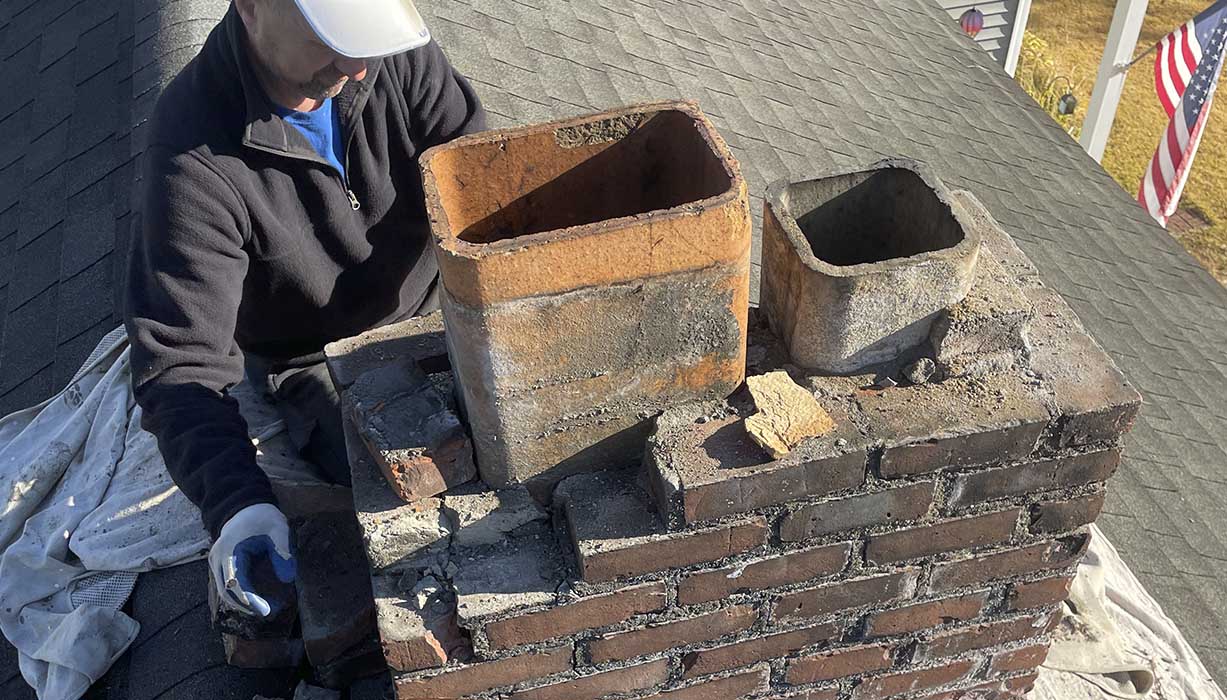
- Loose or missing bricks. A sign the problem has gone on for a while.
- White deposits (efflorescence). Salt left behind by water moving through the masonry.
- Leaks or damp brick in the attic next to the chimney.
As a rough guide, many chimneys need repointing after roughly 20 to 25 years, sooner if they take a lot of water.
Not sure if your mortar is worn out? We inspect the chimney and tell you honestly whether it needs repointing.
Get My Free EstimateHow repointing is done
- Inspection. The chimney is checked from the roof: mortar, brick, crown, cap and flashing.
- Removing old mortar. Worn mortar is cut or raked out to a consistent depth. A common rule of thumb is a depth of about two to two and a half times the joint width.
- Mixing the right mortar. New mortar should not be harder than the brick. Mortar that is too hard can cause old, softer brick to crack and spall.
- Packing the joints. Mortar is pressed in layers until the joint is full, then tooled to shed water.
- Curing and cleanup. The new mortar is protected from rain and freezing while it cures, and the roof is cleaned up.
How long does it take?
For a typical single-flue residential chimney, repointing is often done in one to two days of work. Larger or taller chimneys, extensive damage or additional repairs like a new crown or flashing can add time. Weather matters: mortar needs dry conditions and temperatures above freezing to cure, so in the Capital Region repointing is usually done from spring through early fall.
Repointing vs. rebuilding
| Repointing is usually enough when | A partial rebuild may be needed when |
|---|---|
| Mortar is worn, but bricks are solid | Many bricks are loose, cracked or missing |
| The chimney is straight and stable | The chimney leans or has shifted |
| Damage is spread evenly, not concentrated | The top courses are crumbling |
What affects the cost
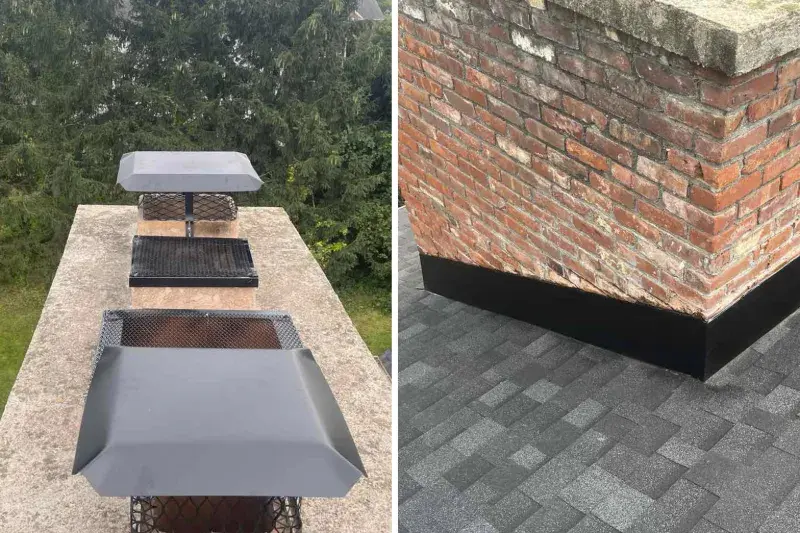
The main factors are the size and height of the chimney, how many joints need work, the roof pitch and access, and whether the crown, cap or flashing also need repair. Doing those repairs together usually saves a second trip and setup. See our chimney repair service for details.