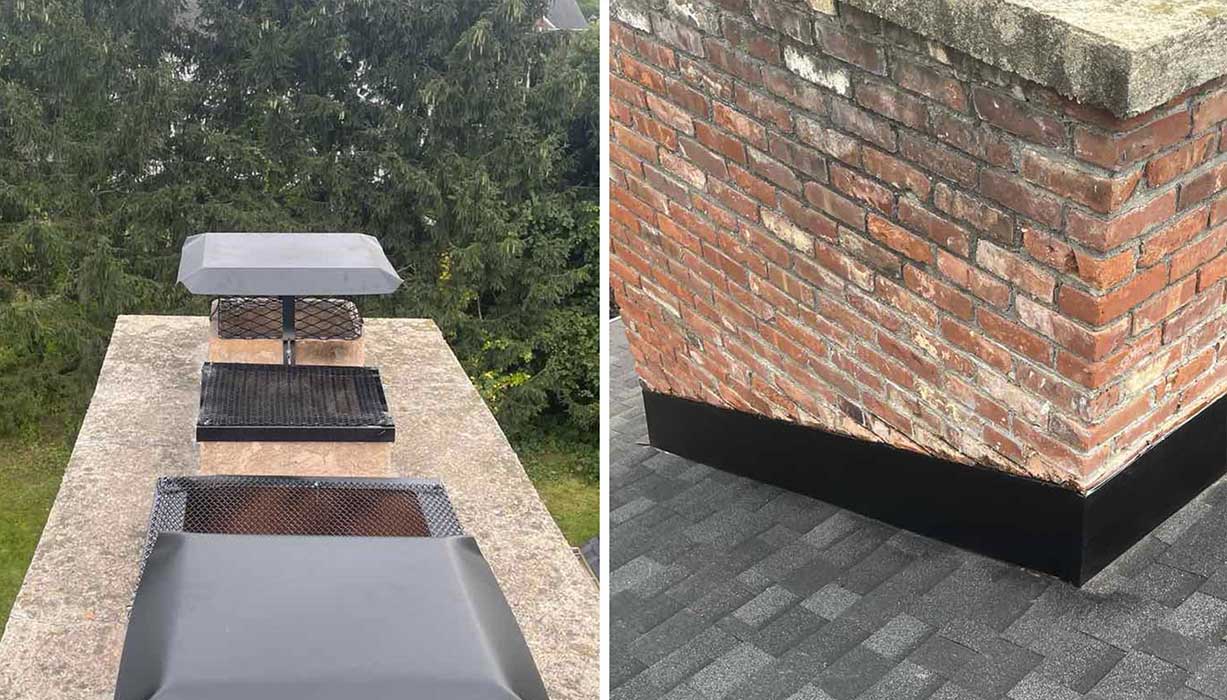
Short answer: Chimney flashing is the set of overlapping metal pieces – step flashing, counterflashing, apron and back pan or cricket – that seal the chimney-roof joint. It fails most often when it relies on caulk, when counterflashing pulls out of worn mortar or when old flashing is reused.
If your roof leaks near the chimney, there’s a good chance the flashing is to blame. Flashing is a set of metal pieces that seal the joint where the chimney passes through the roof. It’s simple in concept but easy to get wrong, and it’s one of the most common sources of leaks we repair. Here’s how it works, why it fails and what a proper repair looks like.
The parts of chimney flashing
- Step flashing. L-shaped pieces installed along the sides of the chimney, one with each course of shingles, so each piece overlaps the one below.
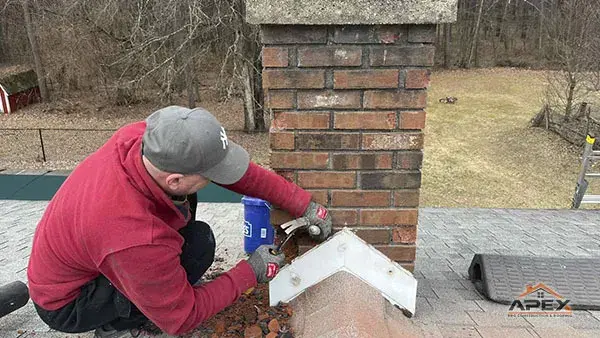
- Counterflashing. Metal set into a mortar joint (or a cut groove) in the brick and bent down over the step flashing. It covers the top edge so water can’t get behind it.
- Apron (front) flashing. A single piece across the downhill face of the chimney, lapped over the shingles below.
- Back pan and cricket. On the uphill side, a back pan or, on wider chimneys, a cricket diverts water around the chimney.
The system works because every piece overlaps the next in the direction water flows. Nothing depends on sealant alone.
Why chimney flashing fails
Caulk instead of proper overlaps
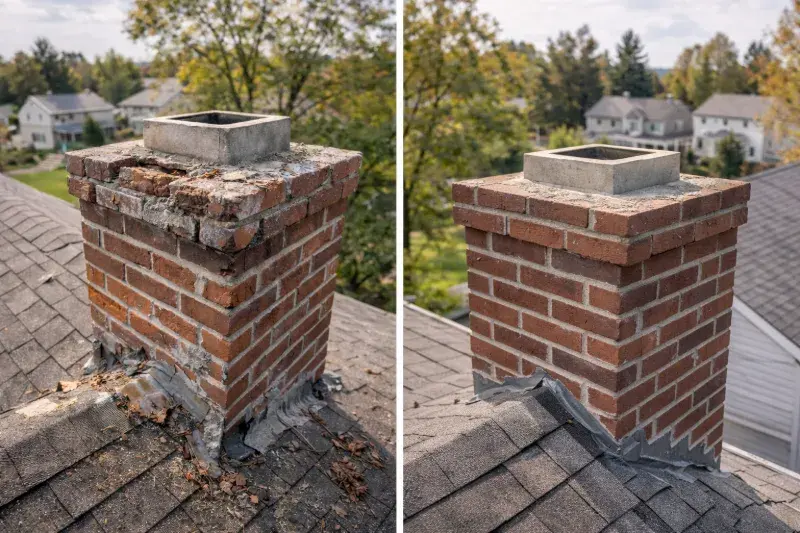
The most common problem we find is flashing that relies on caulk or roofing cement to stay watertight. Sealant dries out and cracks in a few seasons of sun and frost.
Counterflashing pulling out of the mortar
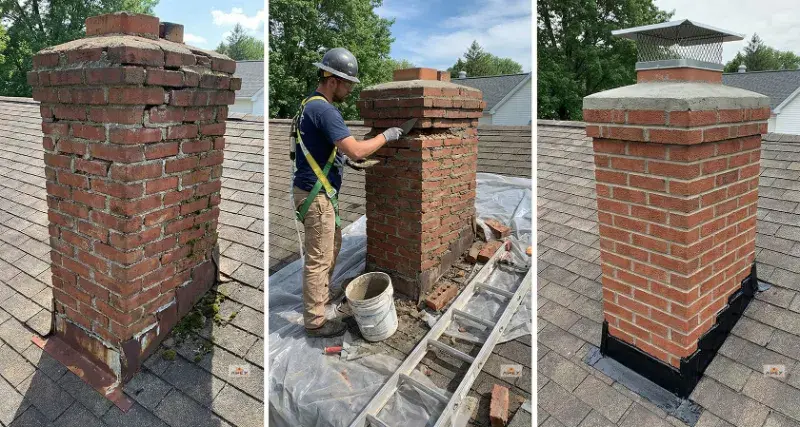
As mortar wears, the counterflashing loosens and pulls away from the brick, opening a gap at the top.
Old flashing reused during a reroof
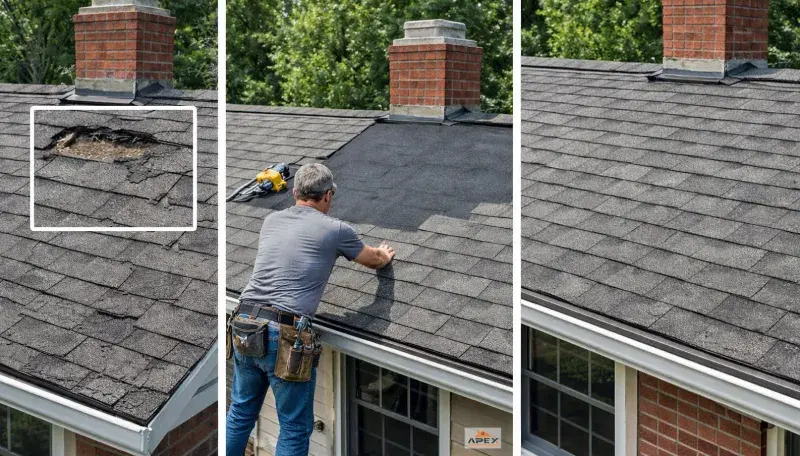
When a new roof goes on but the old flashing stays, the flashing often fails long before the shingles.
Rust and physical damage
Thin or unprotected metal rusts through, and ice, snow and foot traffic can bend it.
No cricket on a wide chimney
Without a cricket, water and snow sit against the back of the chimney and work their way under the flashing.
Leak near the chimney? We replace failed flashing the right way – woven into the shingles, not held on with caulk.
Get My Free EstimateSigns your flashing is failing
- Ceiling or wall stains next to the chimney
- Rust, gaps or lifted edges visible from the ground
- Heavy layers of caulk or tar around the chimney base
- Damp wood or insulation around the chimney in the attic
Why the cap matters too
Flashing protects the joint with the roof, but water can also enter from the top. A metal chimney cap keeps rain, snow, debris and animals out of the flue and protects the crown. A missing cap and a cracked crown are two of the other common causes of chimney leaks.
Repair or replace?
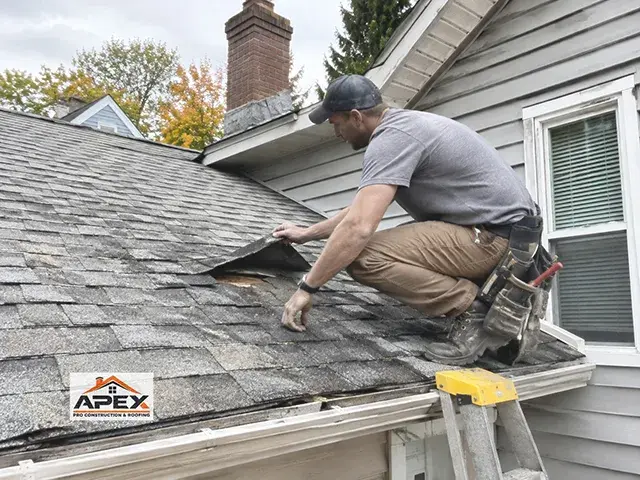
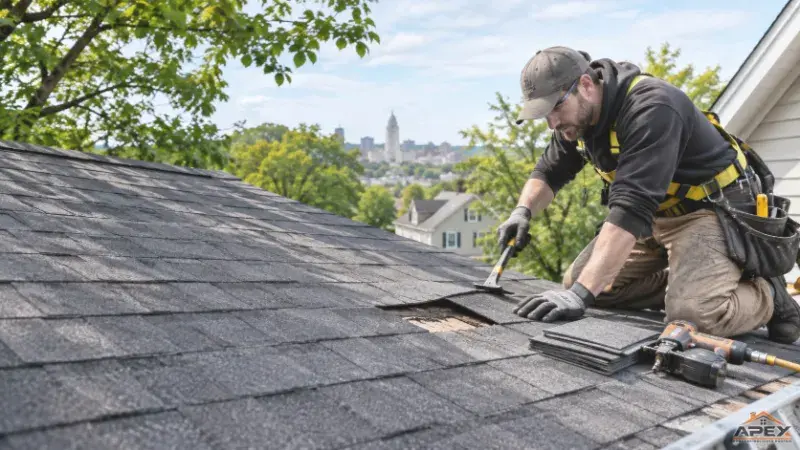
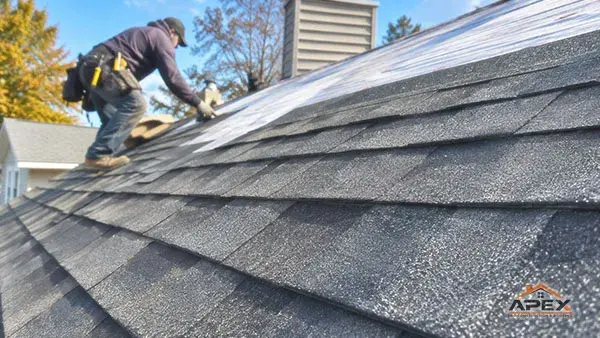
A loose counterflashing edge can sometimes be reset and sealed into the mortar joint. Rusted, torn or caulk-dependent flashing should be replaced. That usually means removing the shingles around the chimney, installing new step flashing course by course, new counterflashing and an apron, then reinstalling the shingles. If the mortar where counterflashing is set is worn, repointing may be needed at the same time.
We repair and replace chimney flashing and install metal caps across the Albany, NY area. See our chimney repair service.